

Revealed | Historic Africa Centre abruptly closes amid financial crisis and plans to sell London home
A £40,000 court bill, governance concerns and major leadership changes have emerged following the historic Black institution’s sad, "sudden" shutdown
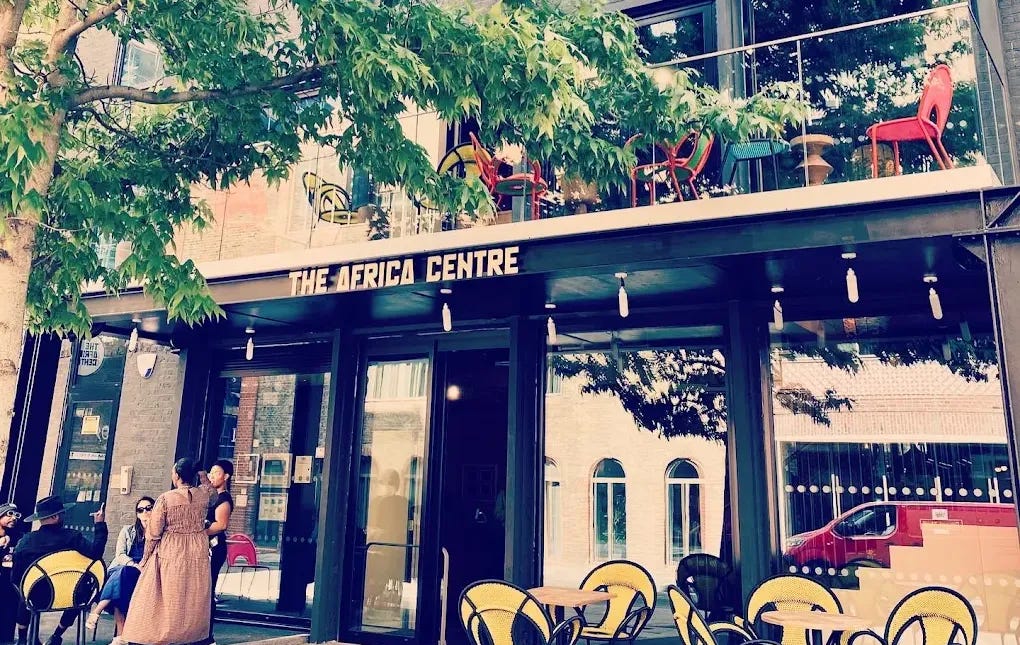
The building’s lights were switched off last week. Events? Axed. Then an unfinished webpage appeared online, complete with what appeared to be artificial intelligence prompts designed to help The Africa Centre staff “explain the financial strain clearly”, “address job security” and “reassure audiences”, before swiftly disappearing
Whole heap of upheaval, passa and deep disappointment in recent days.
Now Black Current News can reveal the fuller picture behind the abrupt closure of the historic institution’s Southwark headquarters: a recent £40,000 court judgement, a £542,000 annual shortfall, governance concerns, big leadership changes and plans to sell its London home, which cost millions to redevelop.
A brief notice published on The Africa Centre’s website around Monday 27 July said the building would be “temporarily closed” from Tuesday 28 July “with a view to reopening as soon as possible”.
The Africa Centre has not publicly explained the reasons for the sudden shutdown beyond citing “circumstances beyond our control”.
However, this news platform has obtained a draft press release bearing The Africa Centre’s letterhead and dated 28 July, which states that trustees have decided to sell the building amid “mounting financial pressures”.
This platform has verified the document. Its wording matches a sale announcement briefly published on the organisation’s website before it was removed.
Information about the proposed sale was also published on the organisation’s frequently asked questions page, which has since become inaccessible.
In an apparent publishing blunder, some of the deleted page contained unanswered questions and drafting instructions seemingly intended to help generate public-facing responses.
No further official information has been forthcoming from the centre. Concerned citizens say its continued silence neither looks good nor bodes well.
£40,000 court judgement
Black Current News also understands that The Africa Centre has been ordered by a County Court to pay around £40,000 following a dispute.
A source close to the organisation said the resulting bill was among the immediate financial pressures behind the closure, amid wider concerns about governance at the charity.
The judgement confirms the amount owed but does not itself establish that the debt caused this turn of events.
Plans to sell
The press release says the proposed sale forms part of a strategy to secure The Africa Centre’s future, with the organisation expected to relocate to smaller premises in the adjoining railway arches.
It states that an extensive review found rising costs, declining unrestricted income and the expense of maintaining the building had rendered its financial model “unsustainable”.
“Remaining in the current premises would continue to divert vital resources away from the programmes, artists and communities that the Centre exists to serve,” the release states.
The deleted FAQs cite further pressures, including the timing of the centre’s redevelopment during the Covid-19 pandemic, the cost-of-living crisis following Russia’s invasion of Ukraine and reduced grant funding.
They also state that The Africa Centre has struggled to secure a title sponsor or core-funding agreement for the Southwark building.
Attempts to generate income through public campaigns, grant applications, corporate pitches and approaches to wealthy individuals are said to have achieved limited success.
To be fair, this reflects the precarious funding landscape for Black-led cultural spaces.
The charity’s latest published accounts reveal the scale of financial pressures it’s been facing.
For the year ending 31 March 2025, The Africa Centre brought in £642,999, up from £464,541 the previous year. But it spent almost £1.19 million (£1,185,039), nearly twice its income, meaning it spent £542,040 more than it brought in.
Direct spending on programmes, events and publicity fell from £81,809 to £28,596, while expenditure on wages and salaries rose from £344,209 to £363,396
It ended the year with £29,550 in cash and more than £1.04 million due to creditors within 12 months. After accounting for other short-term assets, its liabilities exceeded those assets by £907,659.
Auditors warned of a “material uncertainty” raising “significant doubt” about whether the charity could continue operating and meet its financial obligations.
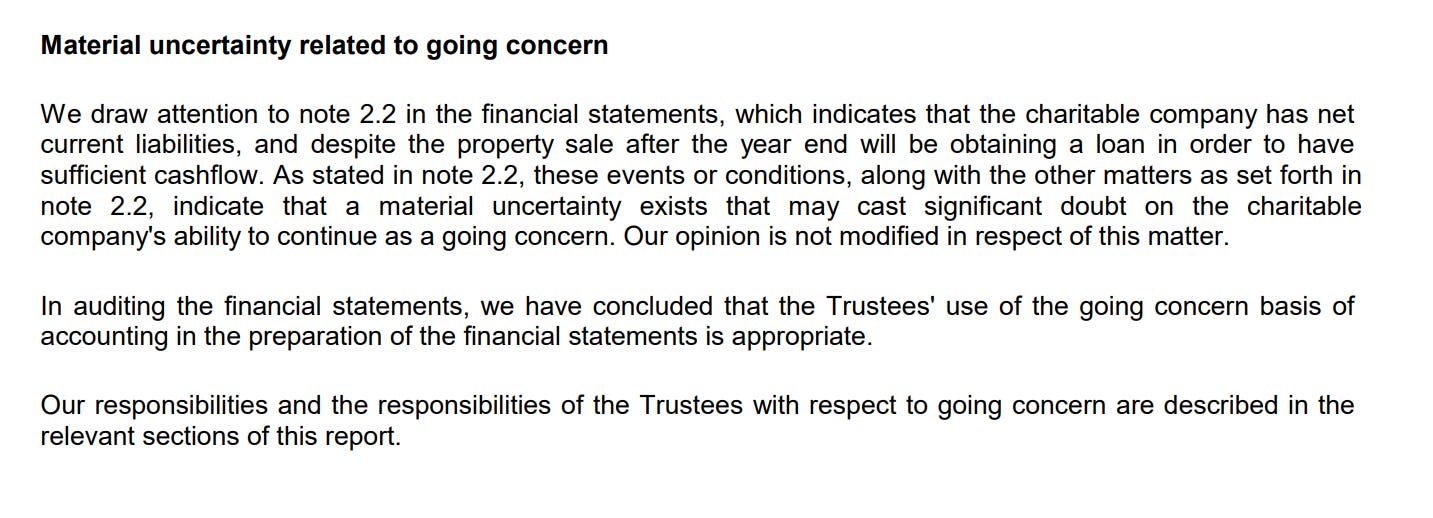
The accounts also state that trustees approved plans to borrow against the charity’s freehold Southwark property to ease cash-flow pressures.
A ‘freehold’ means The Africa Centre owns the building outright, rather than leasing it for a fixed term.
Questions over governance
The Africa Centre’s latest accounts name 12 people who served as trustees during the financial year.
Four resigned during that period, apparently leaving eight on the board. However, only three trustees are currently listed on the Charity Commission register. The reason for the discrepancy is unclear.
Professor Oba Nsugbe is identified as chair in the accounts and on The Africa Centre’s website.
Chief executive Olu Alake is not listed as a trustee in either the accounts or on the Charity Commission register.
The deleted FAQs state that Professor Nsugbe is due to step down as chair, while Mr Alake will leave his role as chief executive in October. They also say that an independent audit of the board’s governance has begun.
The Africa Centre moved into the four-storey Great Suffolk Street property in June 2022, almost a decade after leaving its celebrated Covent Garden home.
Its redevelopment reportedly cost millions and received support from the Greater London Authority, Arts Council England and others.
The proposed sale raises fresh questions and concerns about the future of one of Britain’s longest-running Black cultural institutions.
The organisation’s former Covent Garden building was sold in 2012 after trustees said its upkeep had become unsustainable.
The Save The Africa Centre campaign opposed the decision, partly because campaigners did not trust trustees to spend the £10.5 million proceeds properly.
The deleted FAQs acknowledge that the present crisis may leave campaigners feeling vindicated.
While defending the 2012 sale, the organisation praised them for holding trustees to account and said the current board was determined to “learn from what happened”.
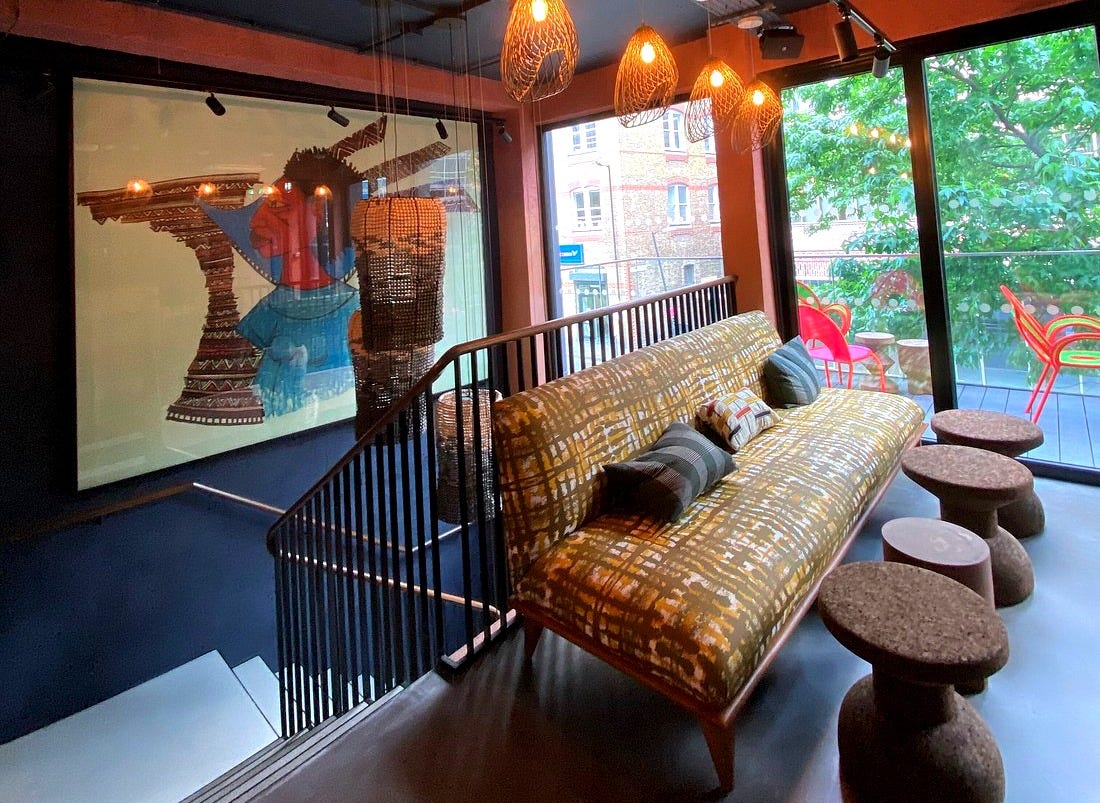
It said proceeds from the proposed Southwark sale would be used to provide greater financial security.
The press release says The Africa Centre will continue operating while relocation plans are developed.
However, the organisation has not publicly explained the relationship between the proposed sale and closure.
Black Current News has repeatedly approached The Africa Centre since last week with questions about its current position.
No response had been received at the time of publication.
What is The Africa Centre and why should we care about what’s happening here?
Founded in 1964, The Africa Centre became a cultural and political home for African people and the diaspora in Britain, particularly during an era of even greater hostility towards Black communities.
Its original central London venue hosted figures including Desmond Tutu, Wole Soyinka, Maya Angelou, Alice Walker and Chinua Achebe, alongside musicians Angélique Kidjo and Fela Kuti.
The centre supported the anti-apartheid movement and, in 1980, presented a statement smuggled out of prison by Nelson Mandela.
Its performances and club nights, including events associated with Soul II Soul, also helped shape Black British culture.
After selling its former home, it spent about a decade without a permanent base before opening in Southwark in 2022.
It remains one of Britain’s most historically significant African cultural institutions.
Got a news tip or story idea? Submit it via this form. Reader feedback and corrections are welcomed separately here.
