

Windrush ship anchor to be recovered for national memorial honouring Caribbean legacy
The ambitious project will see the historic artefact recovered from the Mediterranean seabed and returned to Britain
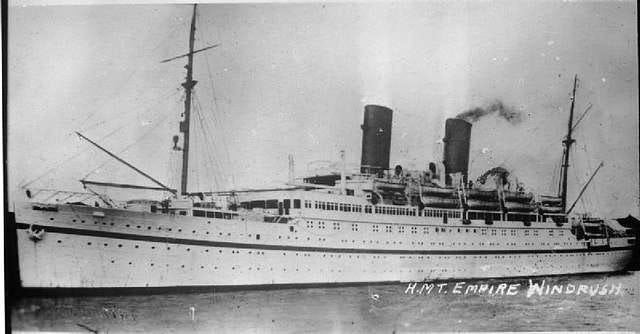
The original anchor of the HMT Empire Windrush could soon be brought back to Britain as part of an ambitious project to create a permanent national memorial honouring the Windrush Generation.
The Windrush Anchor Memorial Foundation unveiled plans ahead of Windrush Day to recover the anchor from the Mediterranean seabed, where the ship sank following a fire in 1954.
Among those supporting the initiative is Black Current News founder, journalist and filmmaker Nadine White, who serves on the charity’s board.
"For many families, including my own, Windrush isn't simply history - it's written into who we are," Ms White said.
"The courage it took to make that journey, to leave everything behind in search of a better life, has shaped how we see the world.
“That's what makes this project so important. It's not just about recovering an anchor from the sea, it's about making sure those stories are never forgotten."

Organisers hope the recovered anchor will become the centrepiece of a major public memorial, alongside a programme of education, community engagement and cultural storytelling designed to preserve the legacy of Caribbean migration for future generations.
The foundation is chaired by Sir Patrick Vernon OBE and includes Reverend Michael King, son of Windrush pioneer Sam King MBE, former Board of Deputies president Marie van der Zyl OBE and marine scientist David Mearns, who is advising on the recovery operation.
Sir Patrick said the project was about preserving an important part of British history for future generations.
“The anchor represents far more than a maritime artefact. It symbolises courage, hope, resilience and the contribution of the Windrush Generation to modern Britain.
“Through this memorial and education programme, we want future generations to better understand the legacy of Windrush and the communities that helped shape contemporary British society.”
The Empire Windrush occupies a unique place in British history.
Its arrival at Tilbury Docks in June 1948, carrying more than 1,000 passengers from the Caribbean, has come to symbolise a generation whose labour, sacrifice and resilience helped rebuild post-war Britain.
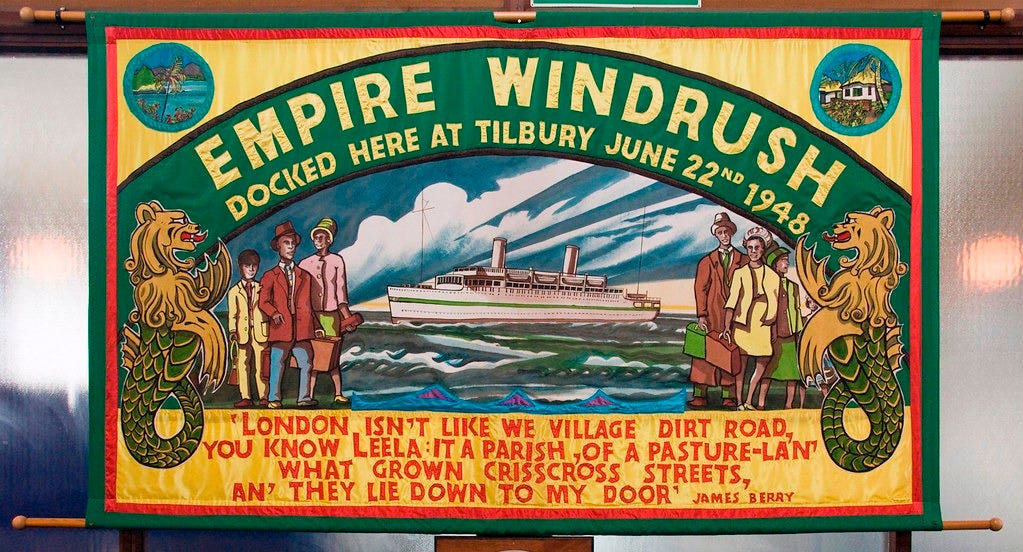
But the ship also carries a more complex history.
Before becoming the Empire Windrush, it was known as the Monte Rosa and was used by the Nazi regime during the Second World War, including in the deportation of Norwegian Jews who were later sent to Auschwitz.
Marie van der Zyl OBE, vice chair of the Windrush Anchor Memorial Foundation and former president of the Board of Deputies of British Jews, said: “The story of Windrush is a remarkable one to understand the cultural make-up of the UK, and we also need to understand the story of the ship pre-Windrush.
“This campaign aims to remember everyone involved in the ship’s history.”
The foundation hopes to raise around £2 million to fund the recovery operation, conservation work, installation of the memorial and a nationwide programme of educational activities.
Plans also include the creation of a replica anchor for travelling exhibitions, community events and school outreach projects.
Public consultation on the memorial’s final location and design is expected to take place in partnership with the Windrush 100 Network.
Got a news tip or story idea? Submit it via this form. Reader feedback and corrections are welcomed separately here.
