

Wilfred Wood at 90: The legacy of Britain's first Black bishop
From founding one of Britain's first Black supplementary schools to supporting families affected by the New Cross Fire, Bishop Wilfred Wood's influence has shaped generations
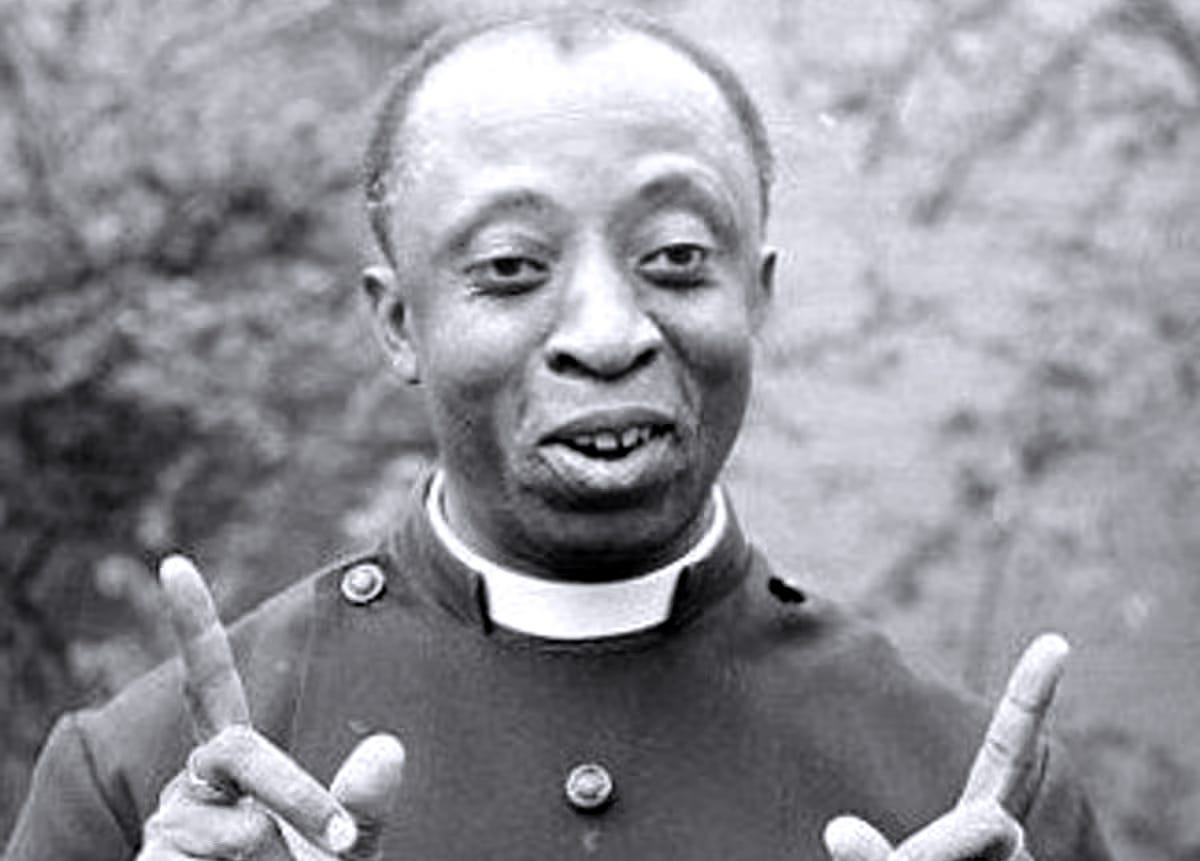
As Bishop Wilfred Wood celebrates his 90th birthday this week, homage has been paid to a man whose contribution to Black British history stretches far beyond the Church.
Born in Barbados on 15 June 1936, Bishop Wood arrived in Britain in 1962 and would go on to become one of the country’s most influential campaigners for racial justice, educational equality and community empowerment.
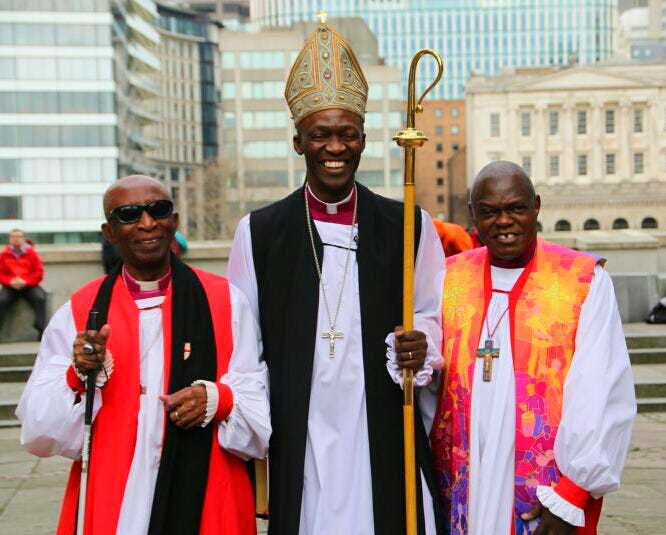
In 1985, he made history as the first Black bishop in the Church of England, serving as Bishop of Croydon.
“When I become Bishop of Croydon in 1985, it was a big occasion because I was then becoming the first ever black Bishop in the Church of England,” he said.
“At the service at St. Paul’s Cathedral, which holds 2 900 (people), there was not enough room, as people had come from all over the world – mostly Black (people) were in attendance and there are 49 bishops who took part in the service.
“Actually, when my appointment was announced, I received 703 letters of congratulations and well-wishes.”
He added: “It was a great day”.
Yet those who know his story often point to his activism as much as his religious leadership.
While serving as a curate at St Stephen’s Church in Shepherd’s Bush, west London, Bishop Wood established one of Britain’s first Black supplementary schools in 1963.
At a time when Caribbean children were routinely failed by the education system, the school provided additional support and encouragement to young Black pupils.
He later became the first Black president of the Institute of Race Relations in 1971 and was among the founding members of the Caribbean Education and Community Workers Association (CECWA), a pioneering organisation that challenged educational inequalities affecting Black children.
CECWA later commissioned Bernard Coard’s groundbreaking work How the West Indian Child is Made Educationally Subnormal in the British School System, a publication that exposed institutional bias within British education and helped spark national debate.
Bishop Wood’s commitment to social justice also extended to policing and community relations.
Following the New Cross Fire of January 1981, which claimed the lives of 13 young Black people and later a 14th victim, Bishop Wood provided pastoral support and spiritual counselling to survivors and bereaved families.
He later joined campaigns calling for the abolition of the controversial “Sus” laws, which were widely criticised for enabling discriminatory policing of Black communities.
His advocacy also spanned housing, criminal justice and urban policy.
Throughout the 1970s, 1980s and 1990s, he emerged as one of the most respected Black voices in public life, helping shape conversations around race and equality at both local and national levels.
Today, Bishop Wilfred Wood's legacy lives on not only through his work but through the communities that continue to honour him. Bishop Wilfred Wood Court in Plaistow, a close in Peckham and two housing developments bearing his name stand as lasting tributes to his contribution to British life.
Among those paying tribute this week is veteran educator and campaigner Professor Gus John, who described Bishop Wood as “a monumental figure in British post-war social history”.
Writing to mark the milestone, Professor John reflected on decades of shared activism and praised Bishop Wood’s role in advancing racial equity and social justice in Britain.
“We give thanks for you and with you,” he wrote.
“You remain a monumental figure in British post-war social history and the current and future generations of young creatives and young activists, of any ethnicity, need to know of you, study you and understand themselves better on account of you.”
Wood’s long public career has not been entirely without criticism. In 1988, while serving as Bishop of Croydon, he provided character evidence on behalf of priest David Tudor, describing him as a man of “the utmost integrity”.
Tudor was later found to have committed child sexual abuse and was eventually banned for life from the Church of England.
The episode has since attracted criticism from some survivors and safeguarding campaigners, who have questioned the support Tudor received from senior church figures.
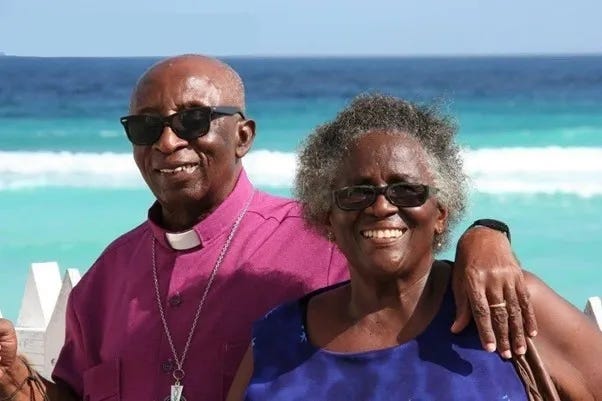
Bishop Wood was knighted in 2000, becoming Sir Wilfred Wood. He retired to Barbados with his wife, Lady Ina Wood, in 2003, where he continues to live today.
Lady Wood died in January 2025 at the age of 86, following a short illness.
Together, they raised five children, two daughters and three sons, and have 10 grandchildren.
Although Bishop Wood has lost his sight in later life, his influence remains imprinted across many of the institutions, campaigns and communities he helped shape.
At 90, the clergyman’s legacy stands as a reminder of the role faith leaders have played in the struggle for racial justice in Britain and of the lasting impact one individual can have on generations that follow.
Got a news tip or story idea? Submit it via this form. Reader feedback and corrections are welcomed separately here.
