

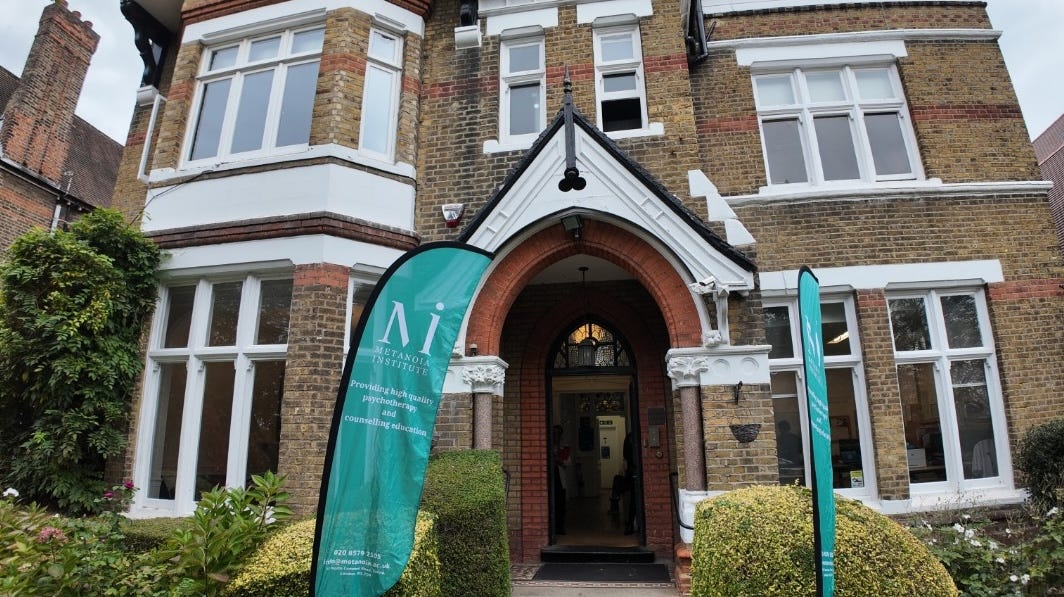
An independent investigation commissioned by Protect Black Women (PBW) has found what it described as “clear, compelling and consistent evidence of race discrimination and harassment” at the Metanoia Institute, a leading UK psychotherapy training provider.
The report, finalised in February 2025, was led by barrister Elaine Banton, who specialises in employment, equality and discrimination law.
She was tasked with examining allegations of racism, including institutional racism, at the institute, which works in conjunction with Middlesex University and has operated since 1984.
Who commissioned the report?
Protect Black Women is a Black feminist advocacy movement established in March 2024 in response to what its founders described as an egregious attack on a Black woman in public office.
As part of its wider mission to challenge misogynoir and institutional harm, the group commissioned the investigation into experiences reported by Black and Asian students and staff at Metanoia.
The probe involved online surveys and interviews with current and former students and staff, whose identities were anonymised.
What did the investigation examine?
The investigation focused on two central themes:
Allegations of harmful and discriminatory conversations around race within teaching spaces
The removal of the “Still Hear” support group, a space established for Black and Asian students following the Black Lives Matter protests in 2020
The Still Hear group had met regularly during academic terms and was facilitated by tutors.
According to the report, participants said they were not consulted before it was disbanded, and many did not accept that it had been intended as a time-limited initiative.
Accounts documented in the report
The investigation included anonymised testimony from current and former students and staff. Among the accounts recorded were the following:
“In the first year there was a topic of Race Privilege and Power and we looked at White Privilege. I spoke of my experiences of being marginalised. A white male student made the comment that he was very uncomfortable and shut the conversation down. This action affirmed white privilege.”
“I chose not to talk about race in my group and people got upset. They wanted me to talk about trauma… I did not colonise or enslave myself.”
“There was a visiting tutor. We all had a break. The tutor said everyone should leave except me as we need a Black person in the picture.”
“I was the only Black woman in the group… I did not feel supported or encouraged in my work.”
“I took the option of an early departure to escape the toxicity.”
The report states that conversations on race were often conducted without sufficient sensitivity or forethought and that Black and Asian students were at times expected to share experiences of trauma in predominantly white spaces without adequate support.
Legal framework and analysis
In her analysis, Elaine outlined the relevant provisions of the Equality Act 2010, including direct race discrimination and harassment, and referenced case law on unconscious bias and stereotyping.
The report further considered the Public Sector Equality Duty, which applies when educational institutions carry out public functions. It stated that discrimination in this context may amount to breaches of that duty.
“In conclusion, I have found compelling and consistent evidence of race discrimination and racial harassment in relation to both aspects of teaching at Metanoia and the manner of the removal of the Still Hear support group”.
She added that the circumstances outlined were “wholly consistent with institutional racism”, referencing the definition articulated by Sir William Macpherson.
The report also noted that there is at least one separate extant race discrimination claim against Metanoia outside the scope of the investigation.
Why this matters
Psychotherapy training institutions shape the values and standards future counsellors carry into practice.
Many graduates go on to work in NHS and private settings, supporting clients experiencing trauma, including racial trauma. The independent report argues that if race discussions are mishandled within training environments, the implications extend beyond individual grievances.
If Black and Asian students feel isolated or unsupported during training, it may affect who enters and remains in the profession.
At a time when mental health services face scrutiny over racial disparities, the case raises broader questions about how institutions responsible for training therapists confront racism within their own structures.
What happens next?
The findings of the PBW-commissioned investigation precede an Employment Tribunal brought by five former members of staff against the institute.
The tribunal is expected to examine claims of discrimination, victimisation and constructive dismissal.
Metanoia has previously described itself as delivering high-quality, professionally accredited psychotherapy training.
Black Current News has approached the institute for comment.
Got a news tip or story idea? Submit it via this form. Reader feedback and corrections are welcomed separately here.