



The 2026 BAFTA Film Awards were meant to be a celebratory night for cinema, including a historic win for director Ryan Coogler and a prize for Black Britain’s Wunmi Mosaku.
Instead, a moment during the ceremony has sparked debate and raised questions about disability, race and broadcast standards.
As Michael B. Jordan and Delroy Lindo took to the stage to present an award on Sunday night, the n-word was shouted from the audience.
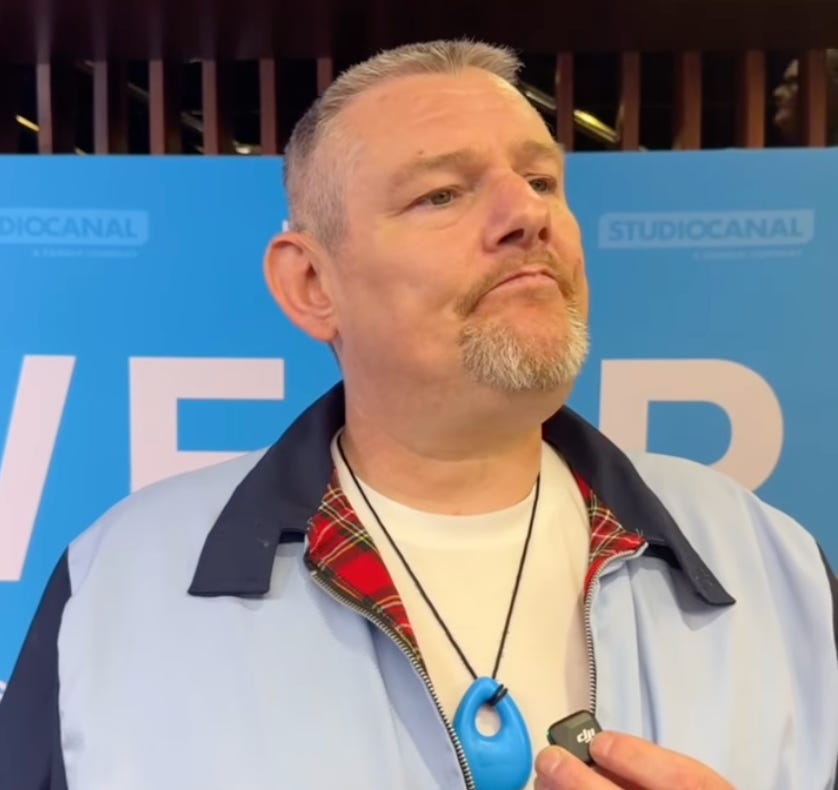
Multiple outlets have identified the person responsible as John Davidson, a Tourette campaigner and the inspiration for the BAFTA-winning film I Swear, who also lives with Tourette syndrome.
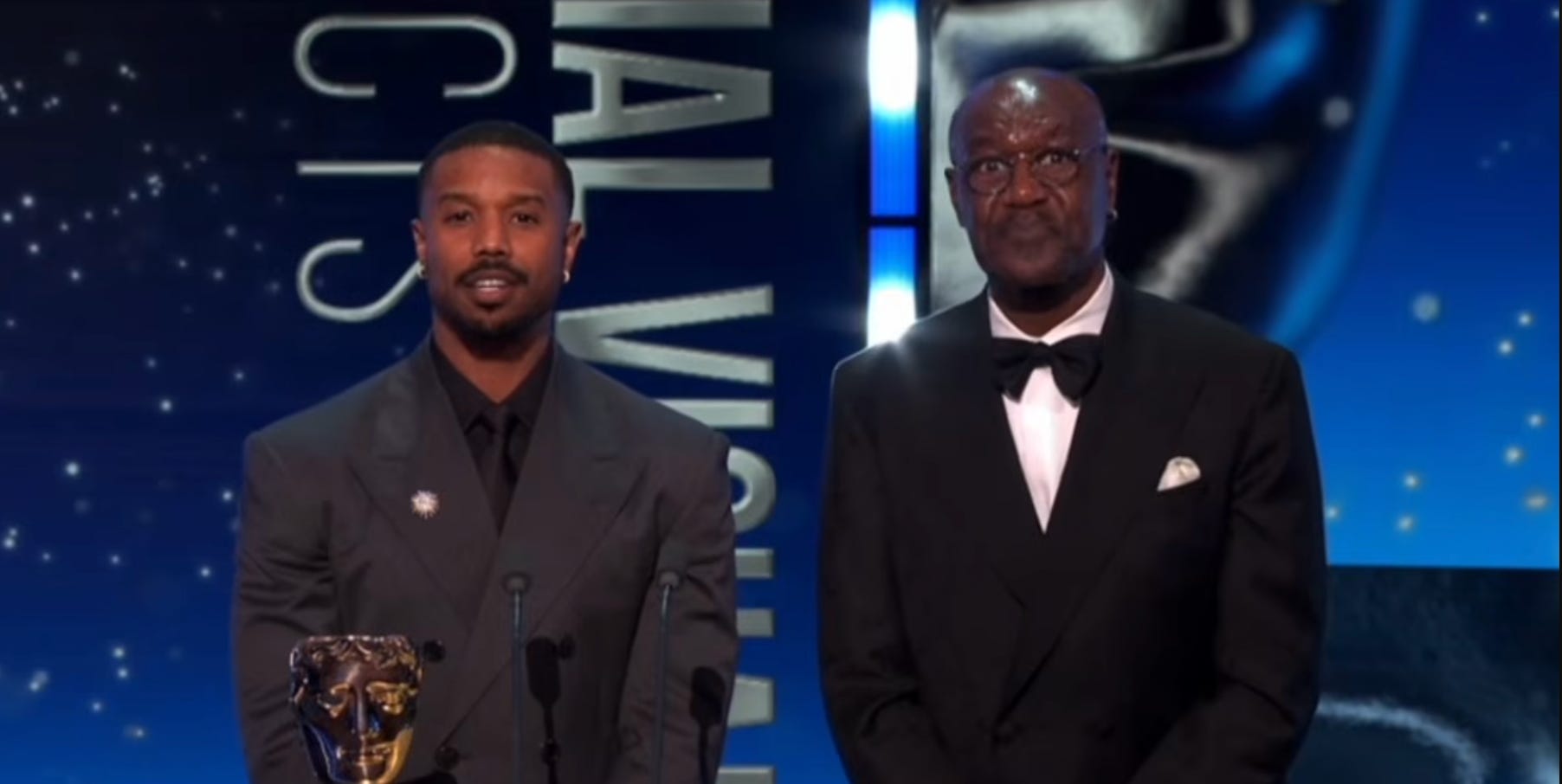
Host Alan Cumming later acknowledged the “strong and offensive language” during the ceremony, stating: “The person who has Tourette syndrome has no control over their language. We apologise if you are offended tonight.”
The BBC subsequently apologised in a media statement, saying the outburst was linked to involuntary verbal tics associated with Tourette syndrome and was “not intentional”.
The ceremony was pre-recorded before being edited for broadcast, prompting some viewers to question why the slur remained audible in the televised version, particularly as other remarks did not appear in the final edit.
Following backlash, a BBC spokesperson told Black Current News on Monday afternoon that they’ve removed the n-word from the version available on BBC iPlayer.
The incident has prompted renewed discussion about Tourette syndrome, specifically a symptom known as coprolalia, and whether the condition can cause people to vocalise offensive language.
So what is Tourette syndrome, and can it result in someone shouting a racial slur?
What is Tourette syndrome?
Tourette syndrome is a neurological condition that causes involuntary movements and sounds known as tics. It usually begins in childhood and varies in severity.
Tics can include:
Motor tics, such as blinking, head jerking or shoulder shrugging
Vocal tics, such as throat clearing, grunting or repeating words and sounds
According to public health authorities, Tourette syndrome is a disorder of the nervous system and not a behavioural issue.
Can Tourette syndrome cause someone to shout the n-word?
Yes, according to medical experts, it is possible.
The explanation lies in a specific symptom known as coprolalia, a form of coprophenomena.
Coprophenomena refers to the involuntary expression of socially inappropriate words or gestures.
Coprolalia, the vocal form, involves people involuntarily saying taboo or offensive words. Tourettes Action, the charity, says coprolalia affects around 10-30% of people with Tourette syndrome.
Because coprolalia often involves language that carry strong social or emotional charge, involuntary outbursts can include profanity, sexual terminology or, in some cases, slurs.
Medical specialists stress that such vocal tics are not intentional and do not reflect a person’s beliefs.
However, the absence of intent does not erase impact.
Both realities can exist at once:
The utterance may be neurologically involuntary
The harm experienced by those who hear it, particularly when directed at Black individuals, is real
A neurological explanation does not remove the historical and cultural weight carried by a racist slur.
Why is this situation being debated?
The BAFTA ceremony was pre-recorded and later edited for broadcast.
Viewers have questioned why the n-word was audible in the televised version, while Akinola Davies Jr’s “free Palestine” remark, made in his acceptance speech for the best ‘Outstanding Debut’ prize, did not appear in the final cut.
Black Current News put this question to the BBC.
The broadcaster said the n-word segment of the broadcast was removed from the version available on BBC iPlayer and apologised again.
In a statement, a spokesperson said: “Some viewers may have heard strong and offensive language during the BAFTA Film Awards.
“This arose from involuntary verbal tics associated with Tourette syndrome and, as explained during the ceremony, it was not intentional.
“We apologise that this was not edited out prior to broadcast and it will now be removed from the version on BBC iPlayer.”
The debate intensified after Academy Award-winning production designer Hannah Beachler, who is Black and worked on Sinners alongside Delroy Lindo and Michael B. Jordan, said on social media that the slur was shouted three times during the evening, including once at her as she made her way to dinner and again at another Black woman.
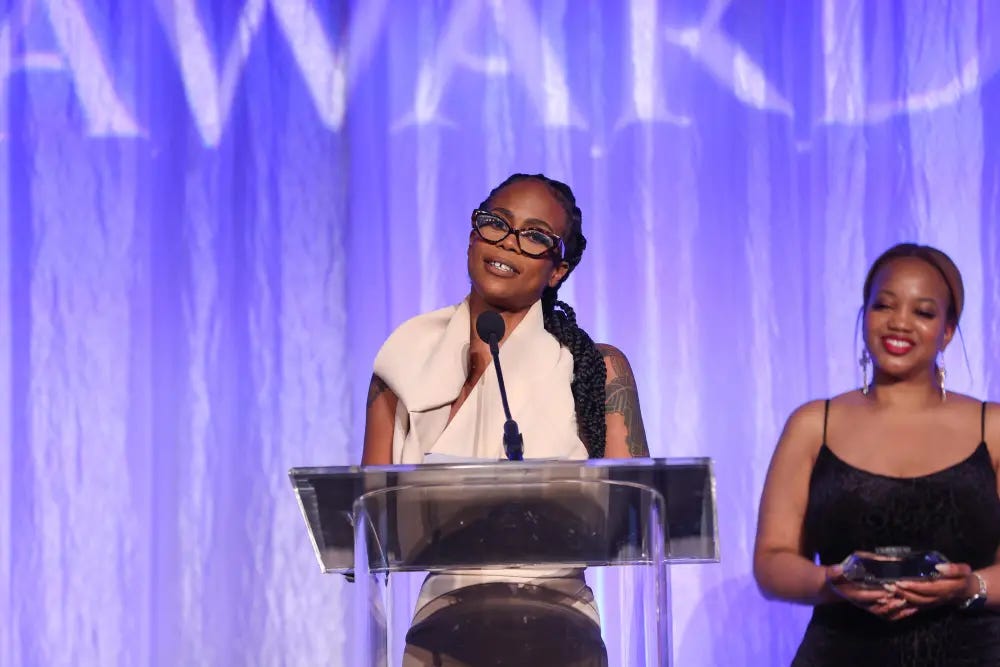
“I understand and deeply know why this is an impossible situation,” she wrote, before criticising what she described as a “throw-away apology” of “if you were offended” from the awards’ host.
Her comments suggest the incident extended beyond a single on-stage moment, adding further context to how those targeted experienced it in real time.
The sensitivity around this topic
Tourette advocacy groups often push back against stigma, noting that many people wrongly assume outbursts are intentional.
At the same time, racial slurs carry a history of violence and dehumanisation.
This is why the conversation feels charged, sitting at the intersection of disability awareness, race and broadcast ethics.
When approached for comment, Tourette’s Action said it was “incredibly proud” of John Davidson and the team behind I Swear, noting that the film has raised awareness about Tourette syndrome and the daily realities faced by those living with the condition.
Addressing the incident, the charity said it “deeply understand[s] that these words can cause hurt” but stressed that tics are involuntary and “not a reflection of a person’s beliefs, intentions, or character”.
“The backlash from certain parts of the media has been extremely saddening,” a statement from the organisation said, adding that what should have been a celebratory evening became overwhelming for John, who left the ceremony early.
The charity warned that misunderstanding the condition can increase isolation and raise the risk of anxiety, depression and suicide among those living with Tourettes.
It urged the public to educate themselves about the Tourettes and to respond with compassion.
Black Current News has asked Tourettes Action whether it wishes to share any message of solidarity with Black communities affected.
Delroy Lindo spoke out after the n-word debacle, saying he and Michael B. Jordan “did what we had to do” on stage and added that he wished “someone from BAFTA spoke to us afterwards”.
What are Black people saying?
Reaction within Black online spaces has been varied and, at times, sharply divided.
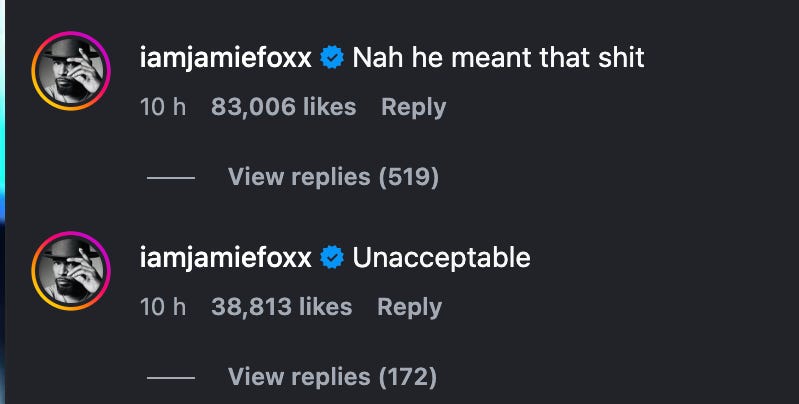
Actor Jamie Foxx commented “unacceptable” beneath a post about the incident and later added, “nah he meant that,” reflecting scepticism among some that the outburst was purely involuntary.
One online user wrote: “Tourette’s is a neurological condition. Coprolalia is rare and even when someone has it, it doesn’t magically generate racial slurs that aren’t already in someone’s vocabulary. All I’m saying is let’s not misuse a medical condition to excuse harmful language”.
As referenced above, others have raised questions about why the slur wasn’t edited out of the broadcast.
At the same time, some commentators stressed that Tourette syndrome is a neurological condition and cautioned against dismissing medical explanations outright.
 Tiktok failed to load.
Enable 3rd party cookies or use another browser
Black online figures who identify as living with Tourette syndrome, including Jhónelle Bean and Instagram personality @Im6footseven, have stated that involuntary outbursts of this nature can occur as part of the condition.
Black filmmaker Jonte Richardson has withdrawn from the BAFTA Emerging Talent judging panel following the controversy over the n-word heard during the awards ceremony, Black Current News revealed on Monday.
In a statement shared online, Jonte said he could not continue working with an organisation that had “failed to safeguard the dignity of its Black guests, members and the Black creative community”.
He also questioned the editorial handling of the broadcast, raising concerns about how potentially offensive language was managed.
Jonte is an award-winning director, writer and producer whose work spans the US and UK, with collaborators including Beyoncé, Denzel Washington and Queen Latifah, according to his biography.
Across the discussion, one theme has emerged repeatedly: that it is possible to acknowledge the neurological basis of Tourette syndrome while also recognising the harm caused when racial slurs are heard, particularly in a room where Black artists are being celebrated.
Got a news tip or story idea? Submit it via this form. Reader feedback and corrections are welcomed separately here.
So, black people are now expected to empathise with white Tourettes 'sufferers' when they spew racist filth? Funny how Davidson was triggered to blurt the 'N' word when he was in close proximity to black men, when the audience was overwhelmingly white. Suggests that on the periphery of his subconscious, lurks a bigot!
Not buying it. People use the excuse of tourettes to say whatever they want whenever they want with no consequences, only compassion from others. I lived in a building with one of these jerks and he hung around in the lobby by the front door cursing at people. I knew it wasn't tourettes (though he claimed that was what he had, when I asked management about it) because it wasn't random profanity but tailored to fit those of us he directed it at. Just like this jackass in the story yelling nigger at black men. If it's a tic then it wouldn't be specific to the victim. Shame these people