

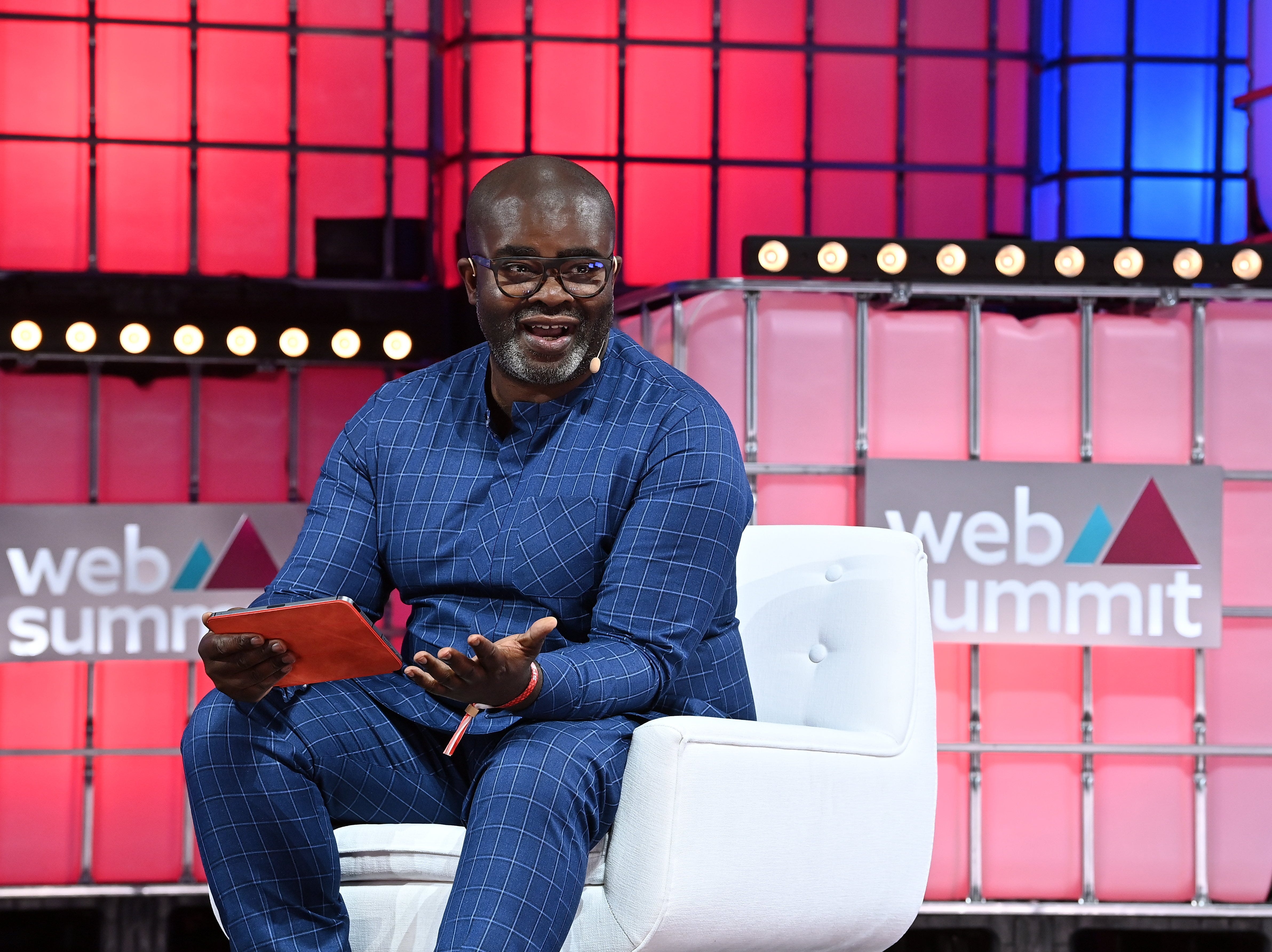
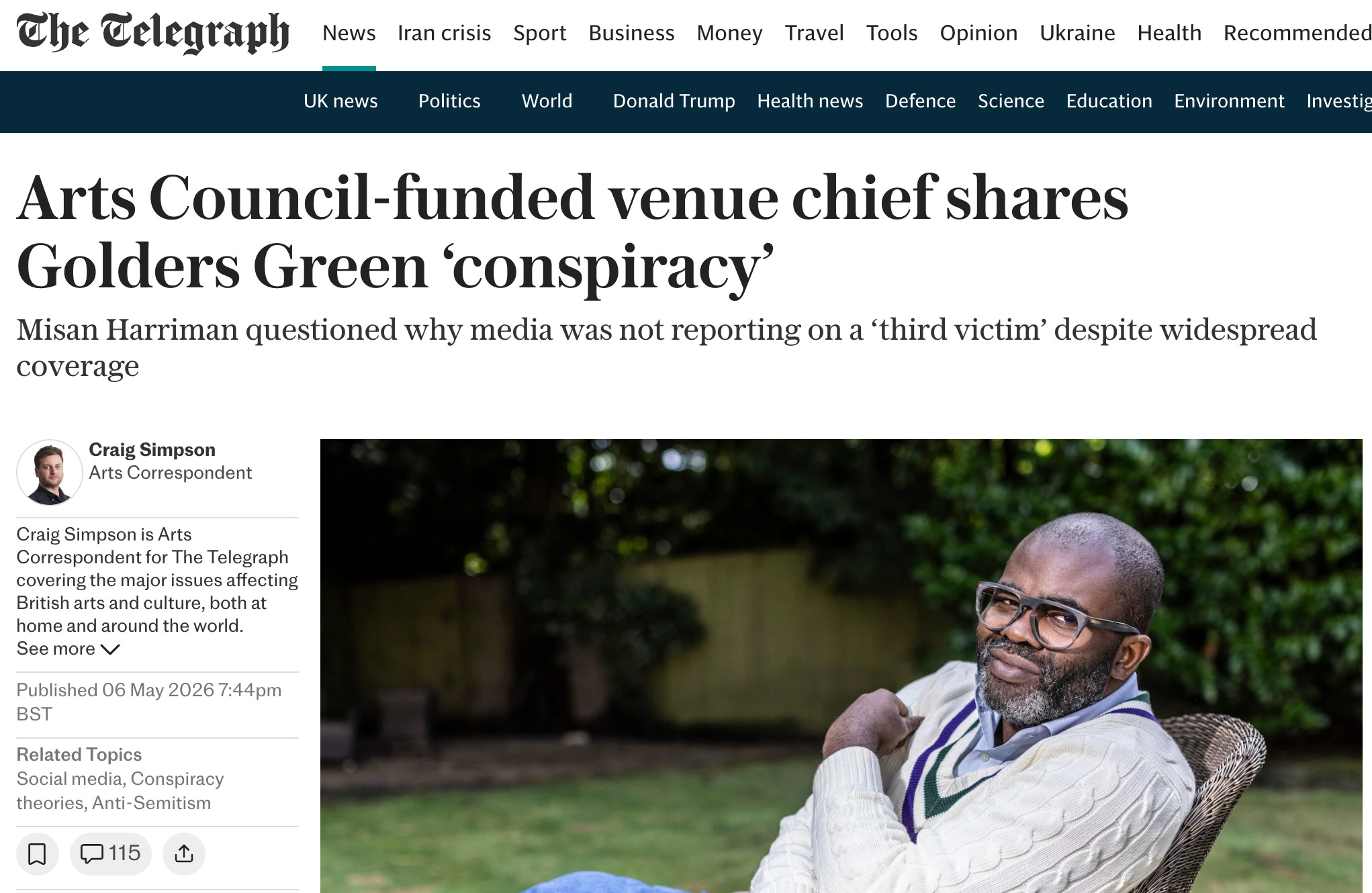
A petition backing Southbank Centre chair Misan Harriman has passed 100,000 signatures amid allegations of a racist, coordinated backlash over the photographer and activist’s social media posts.
The campaign against Harriman, 48, has intensified in recent weeks following criticism of posts in which he questioned disparities in reporting around the Golders Green stabbing attacks and reflected on the rise of Reform UK.
What happened?
In one post, Harriman rightly queried why early media coverage and police messaging appeared to focus primarily on two Jewish victims, despite charges also relating to an alleged earlier attack on a Muslim man in Southwark on the same day.
Detractors bizarrely branded this as “conspiracy theory”, suggesting that he is antisemitic.
Critics have also accused Harriman of comparing Reform UK voters to Nazis following comments he made after the local elections, which is demonstrably untrue.
In the video, Harriman referenced philosopher Susan Sontag’s writing on how ordinary people can be influenced towards or away from extremist politics.
For several years, Harriman - the first Black man to photograph a cover of British Vogue in the magazine's history - has used his platform to speak out on racial injustice and humanitarian issues.
Also the director of an Oscar-nominated documentary, he rose to prominence documenting Black Lives Matter protests and has also been outspoken in his criticism of the Gaza genocide waged by Israel.
Supporters argue the backlash against Harriman cannot be separated from his outspoken activism and visibility as a Black cultural figure willing to publicly challenge powerful institutions and dominant political narratives.
The reaction also taps into a much older dynamic: the policing of outspoken Black public figures perceived to have stepped beyond the boundaries of what parts of the establishment consider acceptable.
In short, this smacks of a Black man being punished for not knowing his place.
Reports suggest more than 60 MPs and peers have signed a letter urging Culture Secretary Lisa Nandy to investigate both Harriman and the Southbank Centre.
The Department for Culture, Media and Sport has been approached for comment.
Who is backing Harriman?
A significant counter-movement has also emerged online, with campaigners, artists and members of the public rallying behind Harriman and accusing sections of the British media of fuelling a coordinated backlash.
Campaign group NewsCord says thousands of complaints have now been lodged against several national newspapers over their coverage of the affair, including The Telegraph, Daily Mail, Daily Express and The Times.
The group alleges that multiple articles breached IPSO accuracy rules, though no rulings have yet been made.
A separate solidarity letter organised through the Good Law Project has also attracted backing from a number of prominent cultural figures, including Akala, Akinola Davies Jr, Colin Salmon, David Oyelowo, Louis Theroux, Greta Thunberg, Annie Lennox, Marcia Cross and Stephen Graham.
Those who have publicly expressed support online also include ITV presenter Alison Hammond, broadcaster Angie Greaves, US actor Billy Porter and US actress and campaigner Amanda Seales.
What has been said about racism?
Writing in a recent Times comment piece calling for Harriman to step down as Southbank Centre chair, chief culture writer Richard Morrison criticised the activist and photographer’s political commentary, questioned his suitability for the role and, for some reason, highlighted his wealthy upbringing, private education and lack of background in classical music.
In a video posted online afterwards, Harriman said many Black people had been left “concerned, scared, traumatised” by the article, which he described as going “to a place of extreme anti-Black racism”.
He suggested the article reflected discomfort with “the idea that I occupy such a powerful and privileged space in the cultural conversation in this country, and I am Black”.
Writing separately in The Guardian, writer and filmmaker Afua Hirsch described the campaign against Harriman as “part of an assault on black figures in public life”.
She also argued that “the experiment with ‘allowing’ Black figures into positions like Harriman’s could all be over in a heartbeat, if we dare to step out of line”.
What has the Southbank Centre said?
A spokesperson for the Southbank Centre said: “The Southbank Centre is an inclusive and welcoming place for everyone including our artists, audience and all colleagues. The Southbank Centre condemns all forms of antisemitism, hatred and discrimination.
“All Southbank Centre board members, including the chair, have the right to exercise their freedom of expression within the law.
“The personal views of individual members of our board do not represent the views of the Southbank Centre and in no way affect our programming nor the welcome that we extend to all.”
Harriman has not stepped down from his role and has continued posting publicly throughout the controversy.
Got a news tip or story idea? Submit it via this form. Reader feedback and corrections are welcomed separately here.
