

Jason Arday fallout: Black supporters caught in the crossfire
As reputations take a hit, some are demanding accountability while others remain focused on the “stinking, dutty jancrow” who helped to oust him from Cambridge
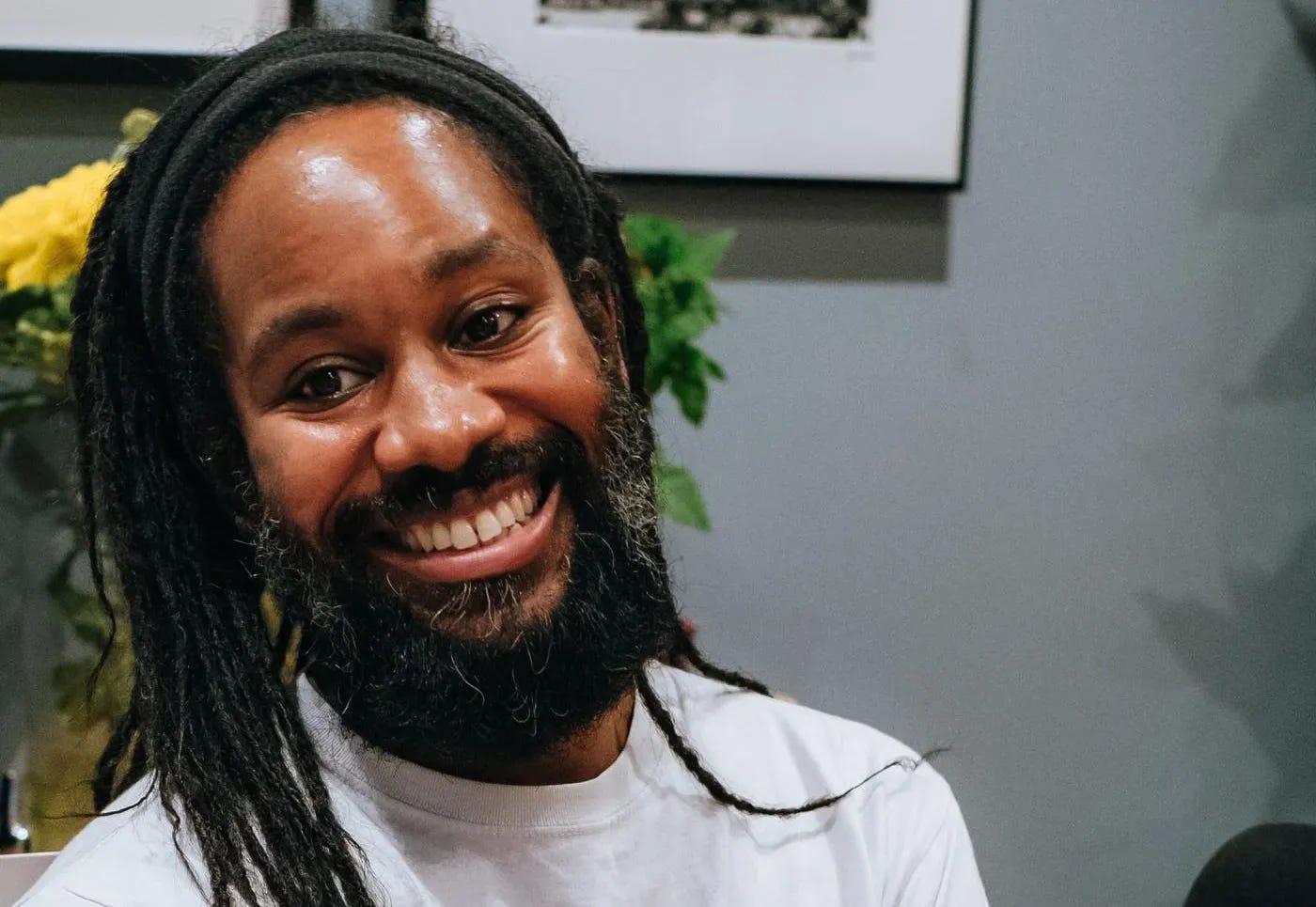
Prominent Black figures who defended Jason Arday publicly are now under attack themselves, facing reputational damage as questions about the former Cambridge professor keep mounting.
Author Nels Abbey has spent days fighting The Spectator, a right-wing publication known for publishing racist views, over its misrepresentation of his recent Times Radio interview last weekend (Saturday 1 August), before this all went left.
On air, he defended Jason against plagiarism allegations tied to his PhD, reading aloud from Liverpool John Moores University’s investigation letter, which found the claims “not proven.”
In an article published days later, The Spectator then, rather bizarrely, described Nels as having chaired the university’s investigation, falsely implying that he had overseen it and helped decide the outcome.
He has been pushing for a thorough, prominent correction ever since and was met with a feisty and dismissive tweet from Michael Gove, the magazine’s editor and a former government minister.


Sonita Alleyne, Master of Jesus College at Cambridge, where Jason was a fellow, put her name to an initial statement supporting him. Appointed in 2019, she became the first Black person to lead an Oxbridge college.
It is unclear what role, if any, Sonita played in Jason’s recruitment. However, Black Current News can reveal that she has been targeted by people who blame her personally for his appointments at Cambridge, question her competence and are calling for her dismissal.
Her contact details have also been circulated on social media.
Jason and his representatives had approached prominent Black Britons and asked them to defend him publicly. Many did, in good faith, lending him their social and political capital at real personal and reputational risk, signing an open letter published on the Good Law Project’s website.
Lord Simon Woolley, principal of Homerton College, Cambridge, was among the signatories. As negative coverage mounted, the reference to Homerton was quietly removed from his listing on the letter, appearing to reflect the growing pressure behind the scenes.
Then came further allegations, beyond the plagiarism claims that LJMU’s investigation found were “not proven”, and questions over whether some of Jason’s most extraordinary claims could be substantiated.
Journalists from one of Britain’s largest right-wing newspapers contacted every signatory to the open letter, asking whether they still stood by Jason and imposing a tight deadline for comment. The clear implication was that the signatories could become part of the story too, understandably putting the fear of God into a lot of them.
Cue: mix-up and a shitstorm that nobody asked for, least of all during a heatwave and cost-of-living crisis.
“We’re only gonna move forward if we stand together; people need to choose their sides,” one well-known Black professional told Black Current News.
The remark, made firmly in support of Jason, captures the division unfolding behind the scenes amid allegations that he is a “plagiarist” and a “fantasist”.
In recent days, Black Current News has been privy to frank conversations among renowned Black Britons about Jason, accountability and the wider consequences of the scandal.
Several figures who had worked with or met him expressed concerns about his professional integrity, but feared dismissal or condemnation had they raised them earlier or publicly.
Others were bemused that some people declined to sign a Good Law Project petition alleging that Jason had been wronged. The sentiment was very much giving: How could you not sign it? Do you not see what’s happening to a fellow Black person? Is everything okay at home?
Across these conflicting positions, one feeling has been resounding: fear, particularly about what comes next for Black people working in academia.
As one commentator told Black Current News, the debacle is “a right-wing, early Christmas gift” to racists and others seeking to dismantle diversity, equity and inclusion.
Appointed Cambridge’s youngest Black professor in 2023, Black Current News first reported that Jason resigned on Wednesday amid mounting scrutiny of his work, qualifications and life story. He says he is autistic and has spoken extensively about having complex learning needs.
Much of the current scrutiny around him was driven by Nathan Cofnas, a former Cambridge academic known for promoting racist ideas.
Jason has made a series of extraordinary claims that have not been independently substantiated, including that a masked man threatened him with a knife inside his faculty building, a severed pig’s head was sent to his parents’ home and he achieved GCSEs despite being unable to read or write.
These are not minor details and, consequently, Jason’s very integrity is being called into question, with an impact that extends far beyond him.
As a sociologist whose work centres race and Black communities, it is argued that he might reasonably have anticipated the risks faced by those who publicly vouched for him.
Marvyn Harrison, founder of Dope Black Dads, described Jason’s apparent failure to consider what other Black people stood to lose as “violent”.
Marcus Ryder, CEO of the Film and TV Charity, said Jason must be held accountable for damaging the credibility of Black people who publicly supported him - but argued that “he was created by a corrupt system.”
“If you have a system that does not reward hard work, penalises the truth and expects Black people to be proverbial ‘unicorns’ to succeed, we should not be surprised when ambitious Black people find shortcuts and present themselves as unicorns,” he told Black Current News.
There is broad agreement that some of the scrutiny is fuelled by racism and many Black people in public life feel an almost innate instinct to protect him.
It is understood that those close to Jason have serious concerns about his mental health and immediate welfare.
Commentators have pointed to stark disparities in how allegations of academic misconduct are treated.
For example, when Dr William O’Reilly, a white Associate Professor in Early Modern History at Cambridge, was found to have committed plagiarism in 2023, media coverage was limited and he kept his job.
However, concerns about Jason extend beyond citation errors to alleged inconsistencies across his academic record and personal story.
There remain calls for Jason, 41, to address what some regard as serious misrepresentations, particularly in light of concern about the controversy’s wider implications.
Writing on Substack, campaigner and former local politician Seyi Akiwowo said: “Arday deserves to be well and safe and to be held responsible for his actions.”
“I’m upset that because it’s the racists that don’t care about being called racist, they were the only ones able to call out significant inaccuracies,” she continued.
“That’s why Lanre Bakare from the Guardian was extremely brave over the weekend and demonstrated fantastic journalism we need in the age of misinformation.
“When, as an expert who can read the facts presented, the statements given, the accolades shared by Arday himself, you can see the amount of times the timelines and accolades didn’t add up and yet still cannot express your discomfort...red flag.
“That is not a community or connection I want to be part of.”
Political commentator Albie Amankona, co-founder of Conservatives Against Racism For Equality, described the situation as “an embarrassment to Black Britain” while acknowledging the pity he feels for Jason.
“The tragic reality is that Jason Arday has potentially done far more damage to Black Britons than any racist agitator ever could,” he said.
Professor Dame Ijeoma Uchegbu, head of Wolfson College, Cambridge, initially signed the Good Law Project’s open letter but removed her name after further allegations emerged.
But most signatories continued to support Jason, including academic and author Kehinde Andrews, who described the controversy as a “racist smear campaign”.
Speaking on his Make It Plain podcast, Kehinde said he “couldn’t care less” whether Jason had exaggerated aspects of his story.
He argued that similar scrutiny of a white Cambridge professor would uncover exaggerations without attracting comparable attention.
Academia, he added, was already full of “good old boys” who lacked merit, cheated their way to the top through connections.
“Even if it were the case, and I do not believe that is the case, (then) fair play,” he said. “That should be equality: to be just as mediocre and bananas as everybody else.”
Lawyer Jacqueline McKenzie said she supported Jason following Liverpool John Moores University’s finding, while questioning whether the university still stood by it.
She argued that Black and Asian professionals face scrutiny rarely applied to their white counterparts, noting that the elderly parents of white academics accused of similar misconduct had not been doorstepped by journalists.
Speaking to Channel 4 on Friday, Professor Gus John warned that Jason’s case could be used to place all Black academics under suspicion, as though they might be “a replica of Arday”.
Black Current News has seen the university’s investigation outcome letter, addressed to Jason and dated 10 March 2026. It unanimously concluded that allegations of plagiarism in his PhD thesis “were not proven”.
Jason has admitted making “mistakes” in his dissertation, namely citation errors, which he attributed to “complex learning needs” and inadequate supervisory support.
The institutions behind the story
Questions have also been raised about whether Cambridge, having faced sustained criticism over its lack of diversity, properly scrutinised Jason’s record or simply invested in the inspirational story surrounding his appointment.
Jason Okundaye, assistant opinion editor at the Guardian, criticised the “lazy way institutions promote faux equality”.
“What happens when an academic’s story is sold through him being the ‘youngest Black ever’, sitting alongside familiar monikers such as ‘the first Black’ or ‘Black excellence’, and asterisked by a tale of hardship?” he asked.
“You are not encouraged or invited to engage with the substance of their scholarship; instead, you are invited to clap.”
Writer Nova Reid condemned what she described what she describes as the “digital lynching” of Jason across British media, calling it “feral racism”.
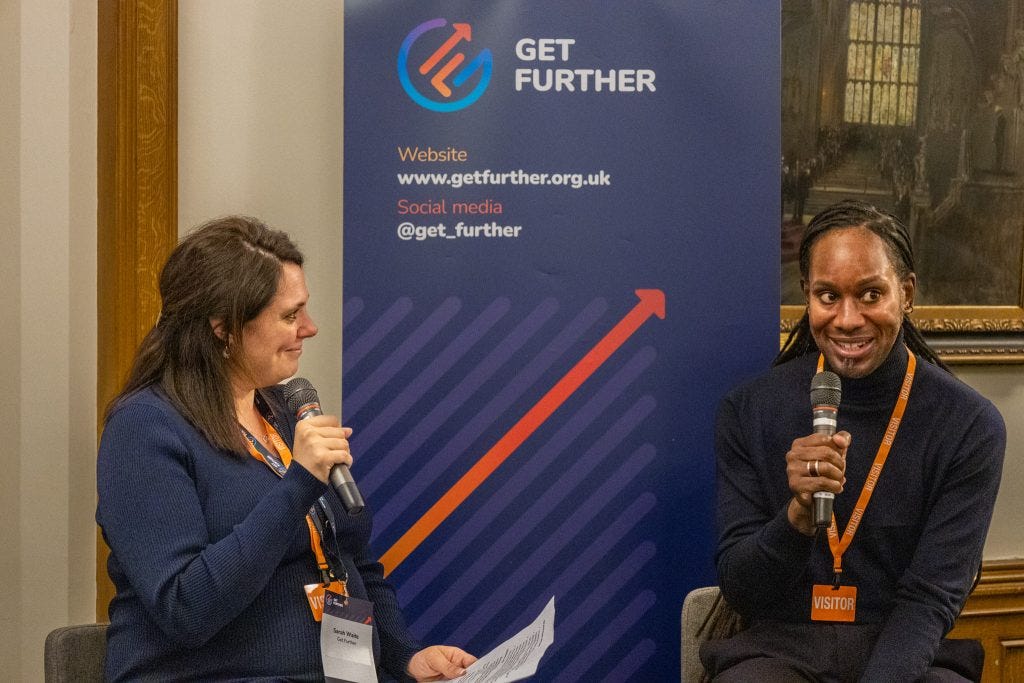
Entrepreneur Tru Powell argued that the scrutiny could not be separated from its source, describing Nathan Cofnas as a “stinking, dutty jancrow” with a record of promoting racist ideas.
“Those views are not rooted in concern for academic standards,” he added.
“They are rooted in an ideology that questions whether Black people belong in elite institutions in the first place.”
The controversy has laid bare two concerns pulling against each other: that Jason has faced scrutiny that’s been disproportionate and, at times, racist - and that real questions remain about his record, plus what it’s cost the people who backed him publicly.
Cambridge and other institutions have questions to answer too, about what checks they actually ran before hailing his appointment as a landmark for Black representation.
Among those who spoke to Black Current News, deep concern for Jason’s welfare sits alongside demands for clarity and accountability. The two, they said, aren’t mutually exclusive.
If you are struggling with suicidal thoughts or concerned about someone else, contact Samaritans free at any time on 116 123 or visit samaritans.org. If someone is in immediate danger, call 999 or go to A&E.
Got a news tip or story idea? Submit it via this form. Reader feedback and corrections are welcomed separately here.

An important, but not easy, thing to address. Multiple things can be true at once, and critical thinking requires that we try and hold all of these things in tension. But to put it bluntly, it’s a mess, but it also makes me think about the ways that I do and don’t engage with black people in the public sphere that I find questionable or problematic, but don’t want to “talk bad” about them in “mixed company”. Lots to mull over.
This is literally the perfect anti-EDI shitstorm and your article is amazing at pulling together all the ways this mess could bring ruin everywhere. Bamboozled to say the least!