

Revealed | Elderly Jamaican man dies after Home Office system leaves him without job or status
After nearly 30 years in the UK, Robert White was left destitute when he lost access to his immigration status, with his solicitor blaming systemic failure for his death


A 72-year-old Jamaican man who had lived in the UK for nearly three decades has died after being left unable to access his immigration status following the government’s shift to a digital-only system.
Robert White lost his job, income and stability after his biometric residence permit (BRP) expired and he was unable to navigate the transition to an online-only immigration system.
Robert’s solicitor, Naga Kandiah, said his death was “not an unfortunate coincidence, but the foreseeable result of a system that failed to protect an elderly man who had lived and contributed to this country for 29 years”.
Robert had been living in the UK since the 1990s, working and building a life while on the 10-year route to settlement. Towards the end of his life, he was based in Wembley, north-west London.
Like many migrants, he was required to renew his leave every 30 months at significant cost.
But when the Home Office moved to a digital system, his physical proof of status expired, leaving him effectively locked out.
“He did not understand the change. He was never supported through it,” Mr Kandiah said.
A rapid collapse
Robert continued working in good faith until a routine right-to-work check by his employer revealed his status had lapsed.
He lost his job immediately.
Within weeks, he had no income, no access to public funds, and no safety net.
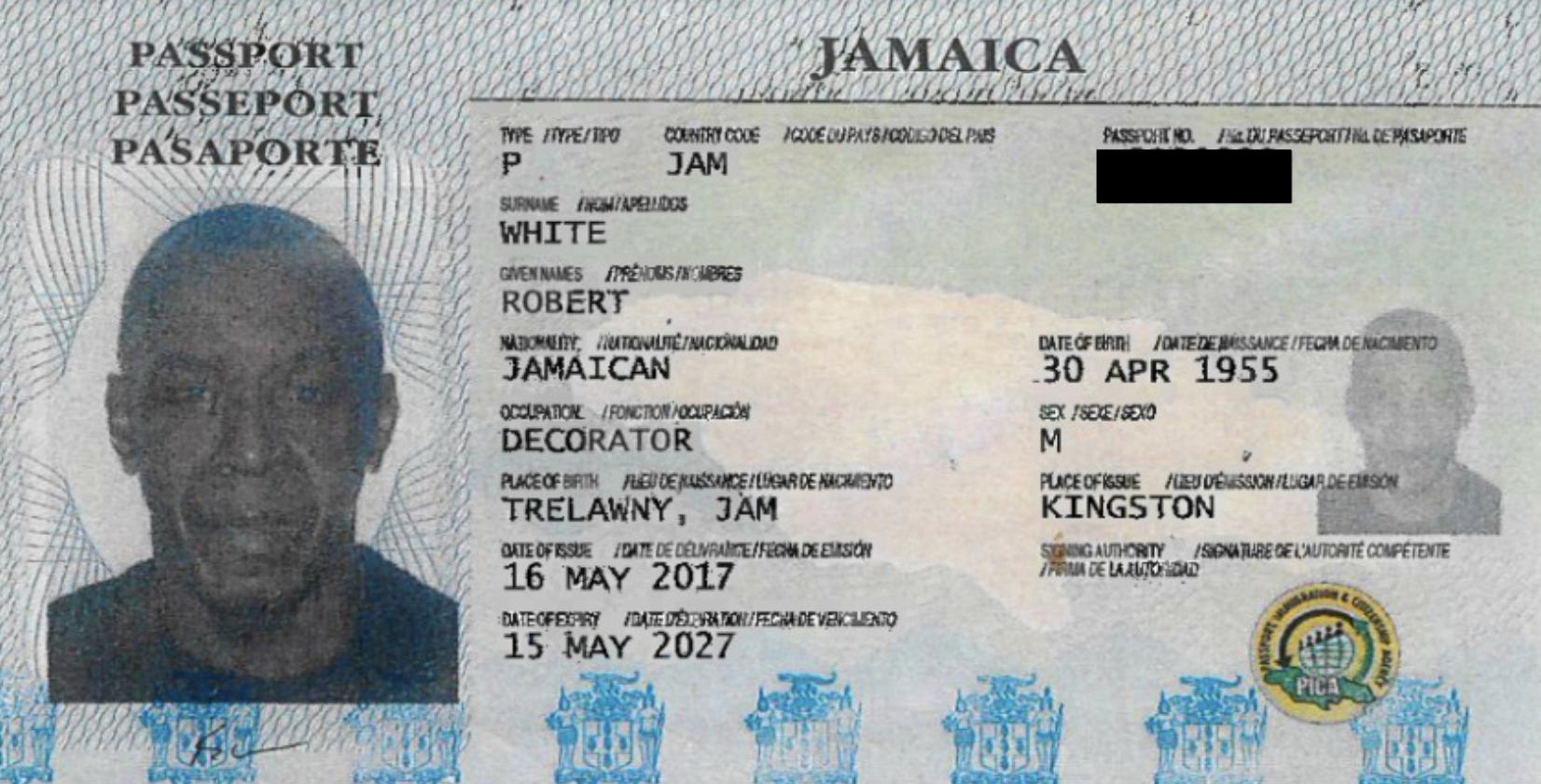
A fee waiver application submitted on his behalf in January 2026, seen by Black Current News, laid bare the extent of his situation.
It confirmed he had no income at all, no savings or assets - and was relying on friends and family for accommodation rather than renting or owning a home.
He was not receiving public funds, had no confirmed employment and could not afford the immigration fees required to regularise his status.
Despite having lived in the UK for decades, he was left effectively destitute.
His monthly outgoings, including food and travel, far exceeded what little support he had left.
In the application, his solicitor described him as a “vulnerable” man in his seventies whose “physical capabilities were on a decline”, adding that he had been unable to access his eVisa account due to difficulties with technology.
“He was genuinely unaware of the expiry of his visa,” the application stated.
‘He was trying his best’
Robert’s best friend of 24 years, Allison - who he named as his next of kin, having few close relatives in Britain - said the stress of his situation took a visible toll on his health.
They met at a birthday party in London and formed an instant bond, with Allison recalling his humour and warmth.
“He told me he couldn’t dance,” she said. “Then he got inside and was dancing properly. I said, ‘you liar’.”
They stayed in close contact ever since, supporting each other through life’s ups and downs.
“Robert was trying his best to do the right thing as far as securing his right to be in the UK,” she said.
“But he didn’t understand the system. If you don’t understand something then it won’t get done.”
Allison then described how he began to deteriorate in the months before his death, struggling with memory, falling in public and living in a cold home without electricity.
“He was always worried,” she said. “When he lost the job, everything just went downhill.”
At one point, she brought him to stay with her after he locked himself out of his home. He had been forgetting basic details and struggling to manage day-to-day life.
“He was on a survival path,” Allison said. “At his age, going out in the cold to work, just to survive.”
Robert was admitted to hospital earlier this month, where doctors diagnosed sepsis and pneumonia.
He died shortly afterwards.
While those conditions were recorded as the immediate cause of death, his solicitor said the wider circumstances cannot be ignored.
“We understand that he was experiencing significant stress and depressive illness, which may have weakened his immune system and increased vulnerability,” Mr Kandiah said.
“It is impossible, morally and factually, to separate his death from the conditions imposed upon him.”
‘Systemic neglect’
His death comes as growing evidence suggests the UK’s digital immigration system is leaving people unable to reliably prove their status, with some reporting job losses, severe stress and being left effectively in limbo.
Mr Kandiah said Robert had been turned away by multiple solicitors before he took on the case pro bono.
“Older persons have a fundamental right to dignity, safety and social protection,” he said.
“Yet Robert was pushed into destitution, stripped of his livelihood, and left unable to access or understand a system that governs his right to exist in this country.”
He warned that the shift to a digital-only immigration system has created a “silent crisis”, particularly for elderly and digitally excluded people.
“People who have lived in this country for decades are being pushed into illegality, not through intent, but through exclusion,” Mr Kandiah said.
The solicitor is now calling for urgent reforms, including non-digital alternatives and automatic settlement for long-term elderly residents.
“It is indefensible to keep elderly individuals on repeated temporary visas, charging thousands each time, only to then exclude them through inaccessible systems,” he said.
“No elderly person should ever again be subjected to exclusion, poverty and preventable harm.”
The Home Office was approached for comment.
Got a news tip or story idea? Submit it via this form. Reader feedback and corrections are welcomed separately here.
