

What does the Iran conflict mean for Black Britain?
As tensions involving Iran rise, the ripple effects could reach far beyond the region with unequal consequences for Black communities

As tensions rise between Iran and the United States, following a sharp escalation in late February when US and Israeli forces launched coordinated airstrikes on Iranian nuclear and military sites, much of the focus has been on escalating tensions and global security.
The strikes, which killed senior Iranian figures, including Supreme Leader Ayatollah Ali Khamenei, triggered retaliatory missile and drone attacks by Iran on Israel, US bases and allied targets across the region, raising fears of a wider regional conflict.
But conflicts like this rarely stay confined to one region.
They show up in everyday life by disrupting major oil and gas supplies and the routes used to move them, pushing up global energy prices.
As energy costs rise, so does the price of producing and transporting goods, driving up bills and food prices.
In Britain, those pressures are not felt equally.
For communities already facing structural inequality, global crises can deepen existing hardship and shape everything from household finances to the wider social climate.
Why do global crises tend to hit Black households in Britain harder?
Global crises tend to deepen existing inequalities, rather than create new ones.
Jabeer Butt OBE, Chief Executive of the Race Equality Foundation, told Black Current News: “Global crises rarely affect societies evenly. When international conflicts trigger inflation, energy price rises or wider economic uncertainty, the consequences tend to fall hardest on people who are already economically insecure.
“In Britain, Black households are more likely to face those pressures because of longstanding inequalities in the labour market, housing and income.”
In practice, that means households with less financial cushion are more exposed when prices rise or income becomes unstable.
Could this push up the cost of living again?
There are early warnings that the economic effects of conflict could once again be felt through rising household costs.
Dr Shabna Begum, CEO of the Runnymede Trust, told Black Current News: “Economists are predicting an imminent rise in food prices, as fertiliser and transport costs are set to rise. Black families in the UK already experience a disproportionately high risk of food insecurity, with 21% reporting such issues.
“This means that Black families who already face hunger or reduced food quality are likely to see this worsen.
“Similarly, whilst the new energy price cap will protect energy bills until July, if the war continues, energy prices will likely rise steeply after that period.”
Dr Begum added: “Black households already experience higher rates of fuel poverty and so this is again, likely to have a bigger impact on them.”
For many families, even small increases in food or energy costs can have immediate consequences.

Have we seen this before in Britain?
Recent history offers a clear precedent.
Matthew Johnson, CEO of Race on the Agenda, told Black Current News: “We know that the cost-of-living crisis that was exacerbated by the war in Ukraine had a disproportionate and severe impact on Black people.”
He added: “Research by Runnymede Trust showed that Black and Global Majority communities were 2.2 times as likely to be in deep poverty than their white counterparts when the war in Ukraine started.
“However, this also rises to 2.7 times when we focus on Black communities alone.”
These patterns suggest that global shocks do not land evenly, but follow existing fault lines.
Could more families be pushed into poverty?
Mr Johnson warned that without targeted support, the consequences could be severe.
“Without the right support, these types of impacts will only push more Black people into poverty and those who are already in poverty will be pushed deeper into it,” he said
Lower average savings, higher levels of debt and overrepresentation in lower income brackets mean some households have less room to absorb economic shocks.
As global crises hit unevenly, targeted support is essential, Mr Johnson explained.
With energy bills expected to rise by around £344 in July, increased financial assistance will be needed.
Without it, more Black households risk falling into poverty, while others are pushed further into it.
The UK government has been approached for comment.
Does conflict fuel division and scapegoating at home?
Periods of economic uncertainty can also shift the social climate.
Dr Begum said: “We know that periods of economic strife and insecurity are fertile breeding ground for the far right who exploit economic turbulence to advance hateful messages about scarcity of resources and scapegoat communities of colour for deteriorating conditions.
“Whether it is austerity or foreign policy decisions, the blame for the fallout has a habit of landing with those least active in making them.”
Mr Johnson also pointed to the risk of increased racialised hostility: “Given how Iran is often publicly associated with Islam, political events can lead some to stereotype or generalise Muslims as a whole.
“This racialised hostility means Black people may face abuse not only because they are Muslim, but because they are perceived to be Muslim based on their appearance, ethnicity or cultural identity.”
How does war change who is seen as a threat?
Beyond economics and social tension, some experts warn that conflict can reshape how societies define belonging and threat.
Liz Fekete, director of the Institute for Race Relations, told Black Current News: “We are going backwards.
“Over the last two decades, racism and intolerance have grown exponentially in the UK, with many retrogressive laws and policies that impact on racialised communities directly linked to the seemingly never-ending ‘war on terror’ brought in after September 11 2001.”
She added: “History teaches us that it is racialised communities who are most readily identified as the ‘enemy within’ at a time of war.”
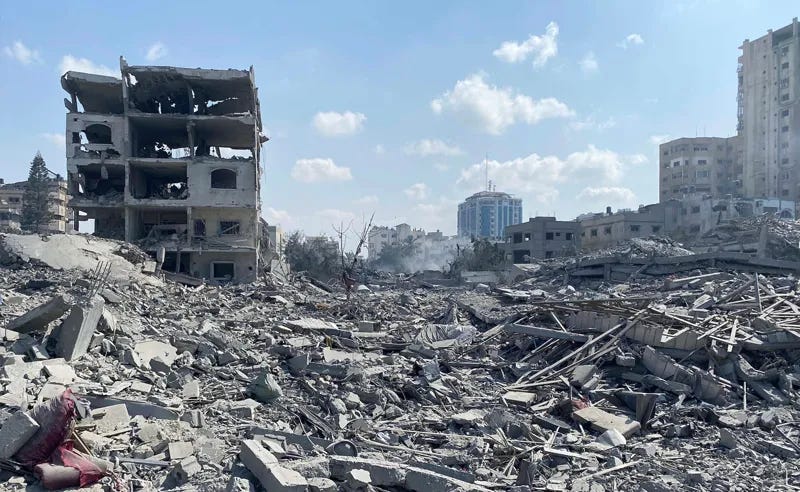
But for many communities, the impact of war is not only about how they are seen, but how they understand the conflict itself.
Dr Begum added: “It also should not be ignored that often these global conflicts trace back over deep colonial scars and that the current military action cannot be delinked from previous histories of extraction of natural resources as well as narratives about ‘moral missions’.
“For many communities of colour in the UK whose own migration pathways were forged through historical colonial chapters - there is an echo of their own experiences in this war in ways that are often ignored.”
Why this matters now
Global conflicts may feel distant, but the effects are not.
From rising bills to shifting political narratives, the consequences show up in everyday life.
The impact is not random. It follows existing inequalities and will continue to hit the same communities hardest.
Recognising that is essential to understanding how global events translate into lived reality in Britain.
Got a news tip or story idea? Submit it via this form. Reader feedback and corrections are welcomed separately here.
