

Black man recalled to prison for saying 'my n*gga' to Black police officer walks free
The Crown Prosecution Service was forced to drop its case following intervention by the defence

A Black man charged with racially aggravated harassment after addressing a Black police officer using the n-word has walked free after the case against him collapsed, his lawyer has confirmed.
The Crown Prosecution Service (CPS) offered no evidence in the prosecution, which centred on the use of a phrase understood within Black British English (BBE) as a term of familiarity.
The case collapsed last year, shortly after the defence served two expert linguistic reports explaining the meaning, history and cultural context of Black British English and African American Vernacular English (AAVE), prompting the CPS to discontinue proceedings.
Commenting on the case, barrister Ife Thompson of Nexus Chambers said it reflected a wider pattern of linguistic discrimination within the criminal justice system.
“Linguistic discrimination refers to a range of practices and systemic failures that result in unfair treatment based on how someone speaks,” she said.
“This case reflects how the CPS and police disproportionately penalise speakers of Black British English, largely due to the absence of clear and appropriate guidance when dealing with bilingual defendants.”
The defendant, who was on licence, had been stopped by police on 9 December 2024.
In an attempt to de-escalate the encounter, he addressed the officer using the phrase “my n*gga”, which is widely understood within Black communities as a term of endearment or solidarity.
When the officer challenged the phrase, the man immediately clarified his meaning and switched to the term “my brother”.
Despite this, he was charged with racially aggravated harassment and recalled to prison, where he spent several months in custody before the case was ultimately dropped.
The defence team, led by Ms Thompson, who was instructed by Ghislaine Sandoval of Hodge Jones & Allen, commissioned expert evidence from linguist Dr Dominique Branson.
The reports outlined how the term “n*gga”, when used by Black speakers, does not carry racist meaning but instead signals shared identity and group membership.
Dr Branson explained that among Black speakers, the term can function as a marker of familiarity rather than hostility.
She cited respected linguist Arthur Spears, who has written that the use of the term “does not necessarily mean that it is racist or reflective of self-hate” and may carry no negative evaluation at all.
Despite the outcome, concerns remain about the consequences faced by the defendant, who had already lost months of his freedom through recall to prison for an offence that was ultimately not made out on the evidence.
Legal experts warn that the case sends a chilling message to speakers of Black British English, particularly those on licence, that their language alone may expose them to criminalisation.
Black British English Linguist Dr Ian Cushing also provided an expert report for this case and noted that “BBE speakers’ use of the term n*gga follows Black diasporic language practices. The use of nigga as a neutral or positive way is completely in line with broader patterns of Black language practices across the world”.
Given the disproportionate number of Black men in the custodial system, the risks of recall are significantly higher, even where alleged conduct would rarely result in imprisonment for others.
“No individual should be made to feel afraid or criminalised because of the language they speak,” Ms Thompson added.
“Current practices allow linguistic discrimination to become normalised within the criminal justice system.
“Black language speakers should be able to use their language freely and without fear.”
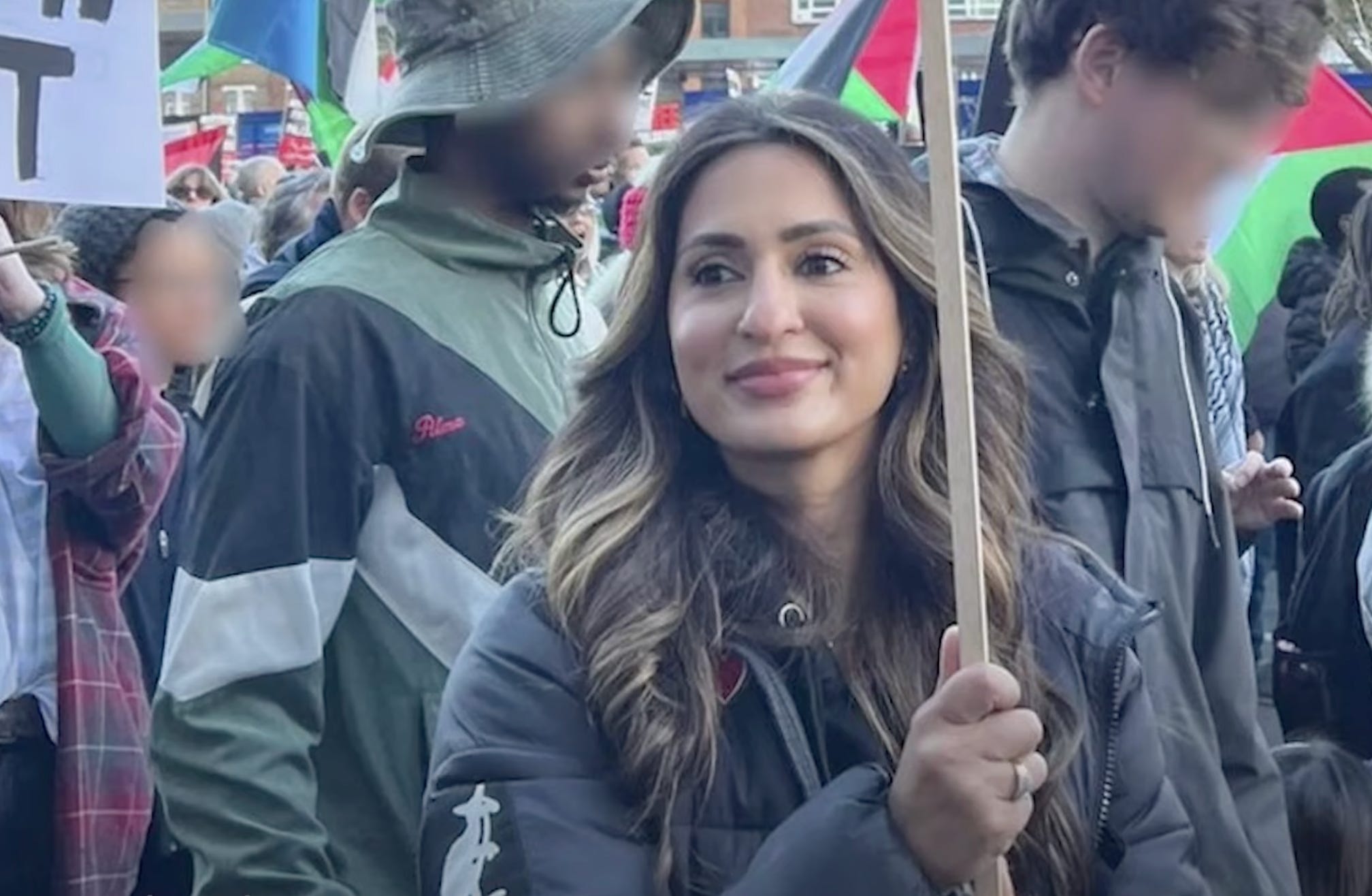
The case follows a series of prosecutions involving Black and Asian people accused of hate offences over intracommunal language, including the 2024 charging of a Black woman for using the n-word when speaking with another Black person online and the 2024 trial of Marieha Hussain, a South Asian woman, over a “coconut” placard, which was political satire.
In 2024, Professor Kehinde Andrews, a prominent UK academic, faced a police investigation for alleged "malicious communications" after using the term "house n*gro" to describe commentator Calvin Robinson in 2024.
The case was eventually dropped after the academic argued the term constituted legitimate, historical political critique rather than a criminal racial slur - and criticised the police for clamping down on “vital expressions of Black political thought”.
Campaigners say such cases expose a recurring failure by police and prosecutors to account for cultural context, with language misinterpreted and criminalised in ways that disproportionately affect minoritised communities.
The CPS has been approached for comment.
Got a news tip or story idea? Submit it via this form. Reader feedback and corrections are welcomed separately here.